 blog
Tyco vs ADT for Businesses: 2026 Comparison
Table of Contents
- Understanding Tyco and ADT: Ownership and Current Status
- Commercial Alarm System Features: What Each Provider Offers
- Business CCTV and Video Surveillance Capabilities
- Business Security Monitoring Costs and Contract Terms
- Security System Contract Questions You Should Ask
- Installation, Maintenance, and Local Support
- Which Provider Is Right for Your Business?
- Frequently Asked Questions
Last Updated: October 21, 2026
Understanding Tyco and ADT: Ownership and Current Status
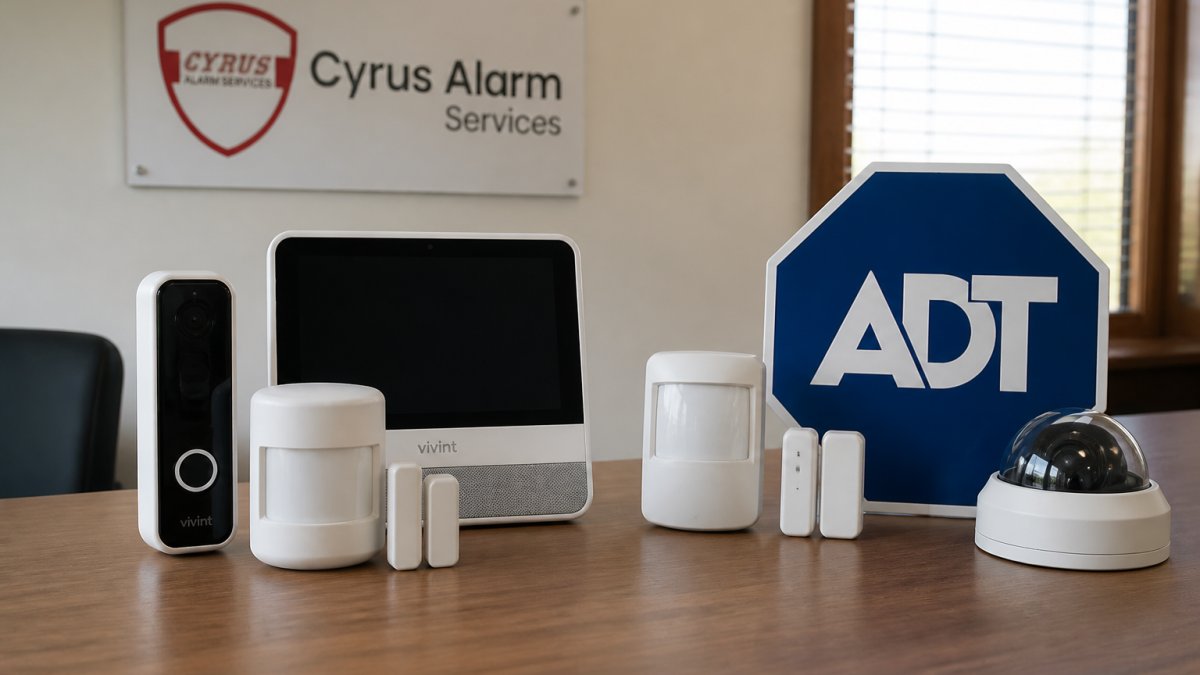
When evaluating tyco vs adt for businesses, start with the corporate structure behind each name, which has shifted significantly over the past decade.
ADT is now owned by Apollo Global Management. Tyco, historically a major security provider, was acquired by Johnson Controls International in 2016, though many still use the Tyco name due to brand recognition and legacy contracts. Today you're likely comparing ADT's current offerings with services that carry the Tyco name but operate under different corporate ownership.
This distinction affects service continuity, system compatibility, and long-term support.
Both offer commercial alarm monitoring, video surveillance, access control, and life-safety integration, but pricing, contracts, and local support vary considerably by region.
Commercial Alarm System Features: What Each Provider Offers
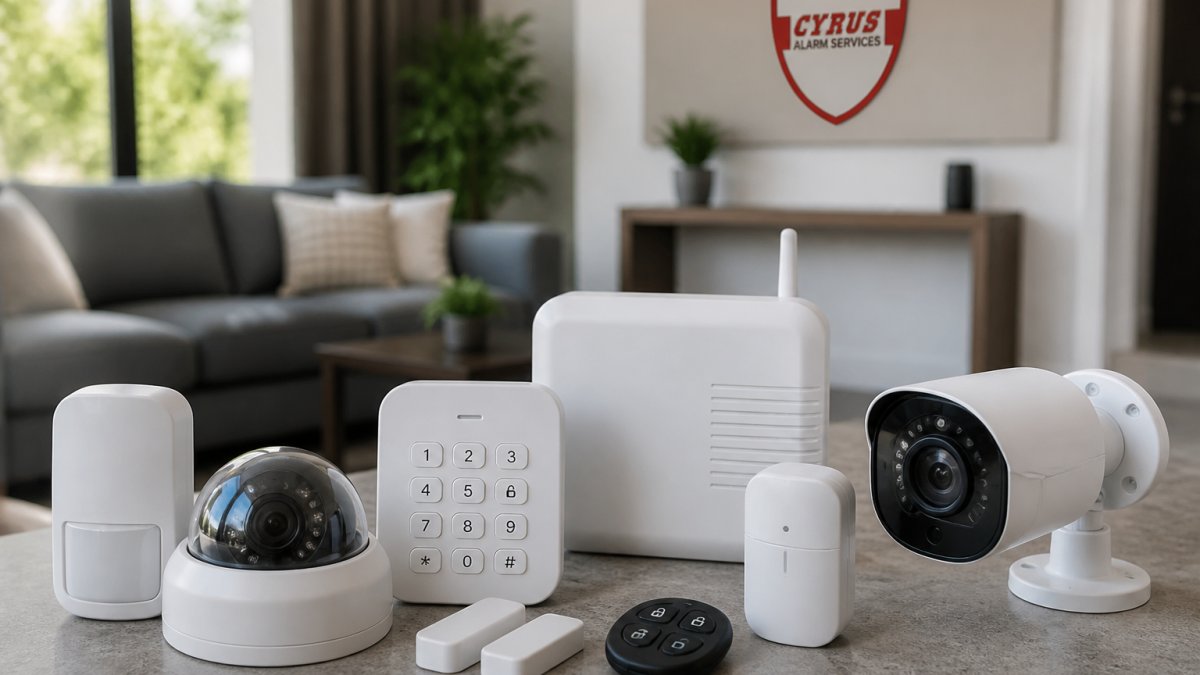
ADT's commercial offerings focus on intrusion detection, burglary alarms, and fire alarm monitoring through a centralized approach, with panels tied to monitoring centers that dispatch emergency response. Motion sensors, door and window sensors, and glass break detectors form the foundation.
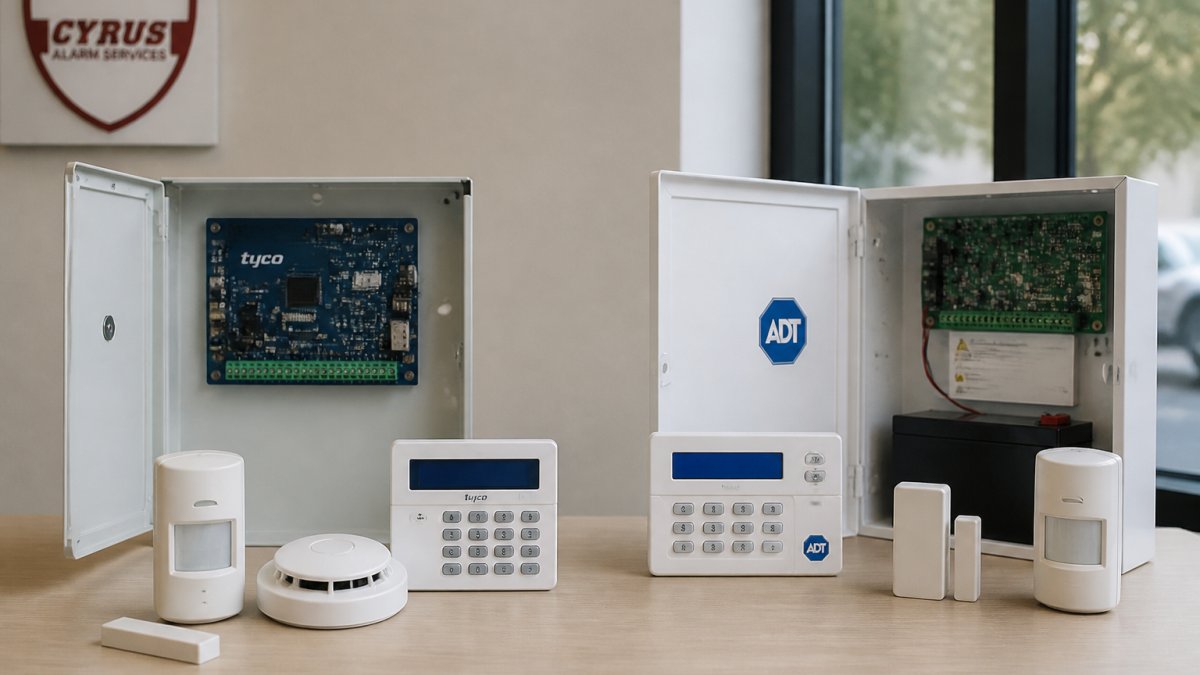
Tyco-branded systems (now under Johnson Controls) emphasize customizable systems that scale with your business, pairing similar sensor technology with more granular access control options. Fire alarm integration and life-safety monitoring are standard across both providers' commercial tiers.
The key difference is flexibility. ADT tends toward standardized configurations with preset options, while Tyco systems historically offered more customization for multi-site management, appealing to businesses with complex layouts. That flexibility often came with higher setup costs and longer installation timelines.
Both providers offer mobile app access for remote monitoring and alerts, now table stakes in commercial security. Implementation quality varies, though: some systems deliver reliable real-time notifications while others lag or drop connectivity during peak usage.
Business CCTV and Video Surveillance Capabilities
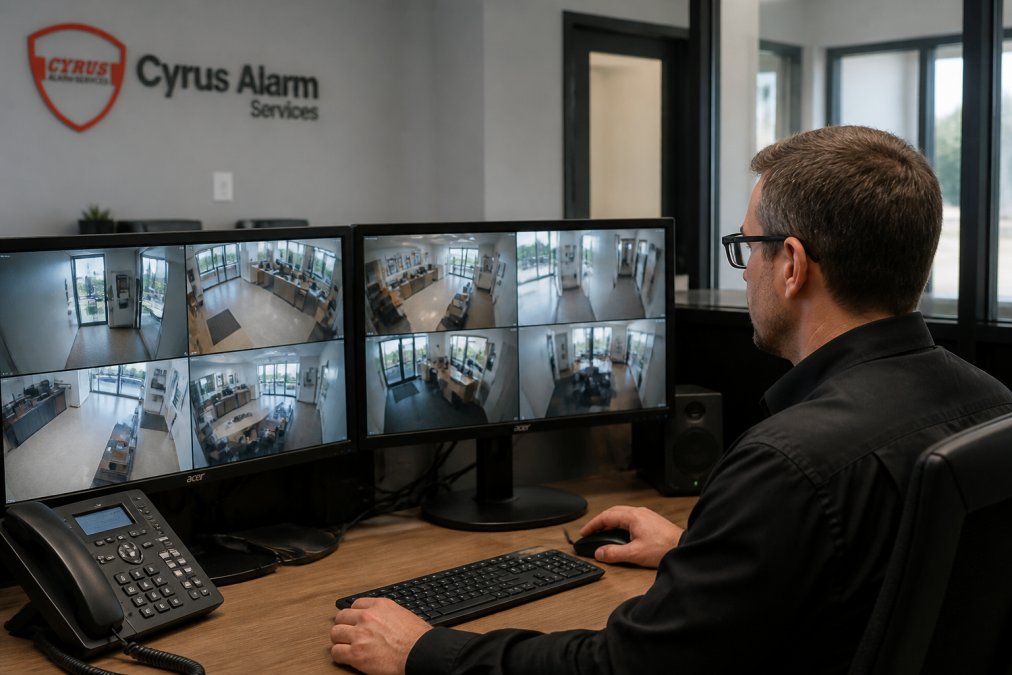
Video surveillance is a critical differentiator when evaluating tyco vs adt for businesses. ADT offers CCTV with cloud storage and remote viewing, integrated with its alarm systems so dispatchers can verify incidents before sending emergency response.
Tyco's video surveillance emphasizes integration with its broader security ecosystem, offering on-premise or cloud storage and multi-site management for businesses operating across locations.
Don't assume equivalent camera quality. ADT's standard offerings often include lower-resolution cameras suitable for general surveillance, while Tyco systems frequently include higher-resolution options at added cost. If you need usable footage for identification or evidence, resolution matters enormously.
Video verification, where a human monitor watches live video before police dispatch, separates premium offerings from basic packages. Both providers offer it, but typically on higher-tier contracts. Without it, police response may be delayed or denied on false alerts.
Business Security Monitoring Costs and Contract Terms
Pricing is where the tyco vs adt for businesses comparison most often falls apart, because neither brand publishes a complete commercial price list. ADT routes business buyers to a custom quote, and Tyco-branded work (now under Johnson Controls) is priced per site.
Equipment and installation. Panels, keypads, motion sensors, door contacts, glass-break detectors, sirens, and communicators are usually itemized separately from labor. A small office quote differs fundamentally from a warehouse with dock doors and exterior coverage.
Monitoring. Monthly monitoring is priced by service tier, not brand. Basic intrusion sits at the low end; fire monitoring, video verification, and after-hours dispatch sit higher. Cellular or dual-path communicators carry an incremental charge.
Maintenance and service calls. Ask whether the contract includes preventive maintenance visits, whether service calls are billed hourly or covered, and the after-hours rate. A low monitoring rate with billable service calls can cost more over three years than a slightly higher all-in rate. Get the service-call rate in writing.
Contract escalation and renewal. Multi-year agreements commonly include an annual increase. Ask for the escalation formula and the renewal price, not just the first-year price. Modeling a 3-5% annual escalator over five years is a reasonable planning assumption, but confirm the actual clause.
Exit costs. The bucket business owners most often miss.
Multi-site pricing. For several locations, ask for a single consolidated quote. Providers managing multi-site accounts can often improve per-site pricing and assign a dedicated account contact, but the discount is negotiated, not published. Get the per-site breakdown to confirm the consolidated price is actually lower.
What to put in a comparison spreadsheet. Columns for equipment, installation, monthly monitoring, communicator, video storage, fire monitoring, service-call rate, escalation clause, term length, early termination fee, equipment ownership, and portability. Fill it in from written quotes only.
Security System Contract Questions You Should Ask
Before committing to either provider, ask specific questions that reveal hidden costs and service limitations. Request written answers; verbal assurances won't protect you if problems emerge later.
First, ask about the alarm verification process. How many false alarms trigger before police stop responding? Most jurisdictions penalize businesses generating excessive false alarms, so understanding each provider's procedures and false alarm rates helps you avoid costly fines.
Second, ask about system compatibility and portability. If you switch providers, can you take your equipment, or does it remain proprietary? Equipment locked into one provider's ecosystem limits your future flexibility.
Third, ask about local service availability. Both operate nationally, but local quality varies dramatically. Request references from nearby businesses using the same provider, and ask specifically about response times for equipment failures and maintenance calls.
Fourth, clarify contract renewal. Get a written commitment on renewal pricing or at least a formula for increases. Some businesses discover renewal quotes jump 30-40% after the initial term, making the initial deal less attractive in retrospect.
Fifth, ask about upgrades and obsolescence. Will the provider upgrade your equipment during the contract term, or will you be stuck with aging technology? How long will they support equipment after end-of-life?
Sixth, understand cancellation terms completely. Early termination fees, equipment buyout costs, and service discontinuation procedures should be crystal clear before you sign.
Installation, Maintenance, and Local Support
Installation quality directly impacts reliability and long-term satisfaction. Both providers employ technicians, but training standards and accountability differ.
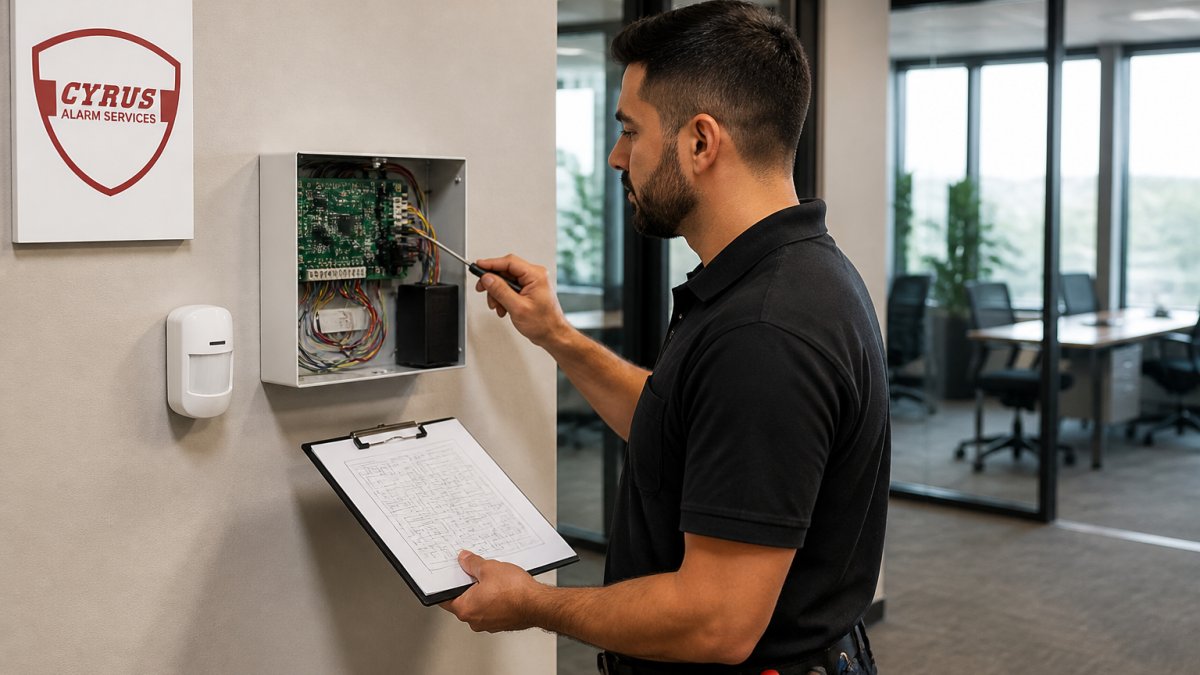
ADT's installation follows standardized procedures across its national network, so you know roughly what to expect but get less customization for unusual layouts.
Tyco's installation emphasizes site-specific design, with technicians assessing the site before proposing layouts. This consultative approach yields better-optimized systems for complex facilities but typically takes longer and costs more upfront.
Maintenance and ongoing support are the true test. After installation, you'll interact with their support team for years, so response times, local technician availability, and remote troubleshooting quality matter enormously.
ADT handles most support inquiries remotely through call centers and dispatches local technicians for on-site issues. Response times vary by region, with urban areas typically faster than rural ones;
Tyco's support similarly uses remote diagnostics first, with local dispatch for hardware issues. Multi-site accounts often get dedicated account managers who understand your facility layouts and can prioritize issues accordingly.
Ask each provider about local presence: do they maintain a local office with technicians, or dispatch from regional hubs? Local presence typically correlates with faster response times and better familiarity with regional issues.
Which Provider Is Right for Your Business?
The honest answer to tyco vs adt for businesses is that the right choice depends less on the brand name than on four factors most comparison articles skip: your site type, equipment ownership, integration with existing systems, and what happens when you change providers.
First, clarify what you are actually comparing. Tyco and ADT are not two independent, current national competitors in the way the query implies. ADT is a standalone security provider; the Tyco security business was acquired by Johnson Controls in 2016, and commercial work carrying the Tyco name is generally delivered through Johnson Controls and its authorized dealers.
Second, match the provider to your site type.
- Small retail or single office: Standardized intrusion detection, a few cameras, and hold-up or panic coverage usually meet the need. A provider with simple packaged configurations and fast installation tends to fit better than a heavily customized design.
- Warehouse or industrial: Long-range detection, dock-door contacts, exterior coverage, and environmental sensors matter more than app features. Ask about detection range, camera resolution at distance, and whether the design accounts for shelving and racking that block line of sight.
- Healthcare or regulated occupancies: Fire alarm monitoring and code compliance drive the decision more than intrusion detection. Confirm the provider's experience with the fire codes and inspection requirements that apply to your occupancy, and ask who handles inspection scheduling and documentation.
- Multi-site operators: Consolidated billing, a single account contact, and consistent equipment standards across sites usually outweigh per-site price. Ask how the provider handles a site that needs service on a weekend and whether the same technician pool covers all locations.
Third, settle ownership and portability before you sign. Ask directly: After the contract ends, do I own the equipment? Can another monitoring company take over the panel, or is it locked to this provider? Can I add cameras or access-control readers from another manufacturer, or am I restricted to the provider's catalog? A system you cannot take over is one you cannot competitively re-bid, affecting renewal pricing for years.
Fourth, compare service-level commitments, not marketing claims. Ask each provider for monitoring center availability (24/7 is standard, but confirm), the alarm verification and escalation procedure, target service-call response time, whether after-hours service is included or billed, and the process for escalating a recurring problem. Distinguish published commitments from verbal assurances; a provider that puts response times and escalation steps in the contract is easier to hold accountable.
A practical decision path. Get written quotes from both, normalized to a five-year total cost of ownership. Confirm the legal entity and monitoring center for each, and ask both to state equipment ownership and portability in the proposal. Then weigh site fit: a simple single-site office usually benefits from a standardized package, while a complex or multi-site operation benefits from a design that accounts for its layout and integration needs. If neither quote addresses ownership, portability, and service response in writing, keep shopping.
Frequently Asked Questions
What is the relationship between Tyco and ADT today?
Tyco International was a major security company that owned ADT for many years. In 2016, Apollo Global Management acquired ADT, making it an independent company. Tyco's security division was later sold and is now part of other entities. For businesses evaluating security providers, the key point is that ADT and Tyco are now separate companies with different ownership, service structures, and pricing models. Understanding this distinction helps clarify which provider's current offerings and support systems match your business needs.
What questions should a business ask before signing a security monitoring contract?
Before committing to any security contract, ask about monitoring response times, whether the provider verifies alarms before dispatching emergency services, what happens if you need to relocate or add sites, early termination fees, equipment ownership versus leasing, and how the system integrates with your existing technology. Also clarify the scope of their service area, whether they handle your specific industry's compliance requirements, and what support is available outside business hours. These details directly impact your total cost of ownership and operational flexibility.
How do business security monitoring costs differ between providers?
Business security monitoring costs vary based on system complexity, number of entry points, video surveillance requirements, monitoring center response level, contract length, and geographic service area. Most providers charge separate fees for equipment, installation, monthly monitoring, and optional services like mobile app access or multi-site management. Comparing total cost of ownership requires looking beyond the monthly fee to include upfront installation costs, equipment upgrades, and any hidden contract penalties. Request detailed quotes from multiple providers to understand the full financial picture.
What commercial alarm system features should a small business prioritize?
Small businesses typically need intrusion detection (door and window sensors, motion sensors), an accessible alarm panel, 24/7 central monitoring station coverage, remote access via mobile app, and integration with access control if managing employee entry. Video surveillance with clear image quality is critical for liability and incident investigation. Ensure the system can scale if your business expands and that the provider offers customization for your specific layout and security gaps. Ask whether the system includes life safety devices like fire and carbon monoxide detection, which protect both people and assets.