 comparison
Tyco vs Vivint Security Systems: 2026 Comparison
Table of Contents
- Tyco vs Vivint: Head-to-Head Overview
- Comparison Table: Equipment, Monitoring, and Pricing
- Professional Installation vs DIY: Which System Fits Your Setup
- Commercial CCTV Systems and Video Integration
- Commercial Alarm Monitoring and Response Times
- Small Business Security System Comparison: Which Wins for Commercial Use
- Smart Home Automation and Device Compatibility
- Contract Terms, Cancellation Flexibility, and Total Cost of Ownership
- Frequently Asked Questions
Last Updated: October 15, 2026
Tyco vs Vivint: Head-to-Head Overview
Choosing between tyco vs vivint security systems means comparing two approaches: Tyco, now part of Johnson Controls, focuses on commercial-grade alarms and monitoring, while Vivint emphasizes consumer-friendly packages with integrated smart home features.
What Tyco Offers Today
Tyco's security division operates primarily in the commercial space, providing alarms, CCTV, and professional monitoring for businesses of all sizes. Its industrial-grade hardware is built for heavy use and integrates with central monitoring stations handling alarm response and dispatch.
For residential customers, Tyco's presence has diminished; most homeowners encounter it through legacy systems or local dealers. Its strength lies in commercial CCTV, access control, and fire safety integration, not consumer smart home automation.
What Vivint Offers
Vivint positions itself as a consumer security company emphasizing smart home integration. Its packages bundle alarm equipment, 24/7 professional monitoring, video doorbells, and automated locks, with plans starting at $24.99 per month.
Vivint's appeal is simplicity: its app provides remote access, and its equipment works with common smart home platforms. For homeowners seeking an all-in-one solution, Vivint is more consumer-friendly than Tyco.
Comparison Table: Equipment, Monitoring, and Pricing
| Aspect | Tyco | Vivint |
|---|---|---|
| Primary Market | Commercial, enterprise | Residential, consumer |
| Equipment Focus | Industrial-grade alarm, CCTV, access control | Consumer alarm, video doorbells, smart locks |
| Monitoring Plans | Professional, commercial-focused | Scalable consumer plans starting $24.99/mo |
| Smart Home Integration | Limited, business-focused | Full integration with smart home automation |
| Installation | Professional, typically complex | Professional or guided DIY options |
| Best For | Businesses, commercial properties | Homeowners wanting integrated security and automation |
| System Customization | Extensive, enterprise-level | Standard packages with add-on options |
Professional Installation vs DIY: Which System Fits Your Setup
Professional installation ensures your system is configured correctly and integrated with monitoring from day one. Tyco typically requires it, since commercial systems demand precise configuration.
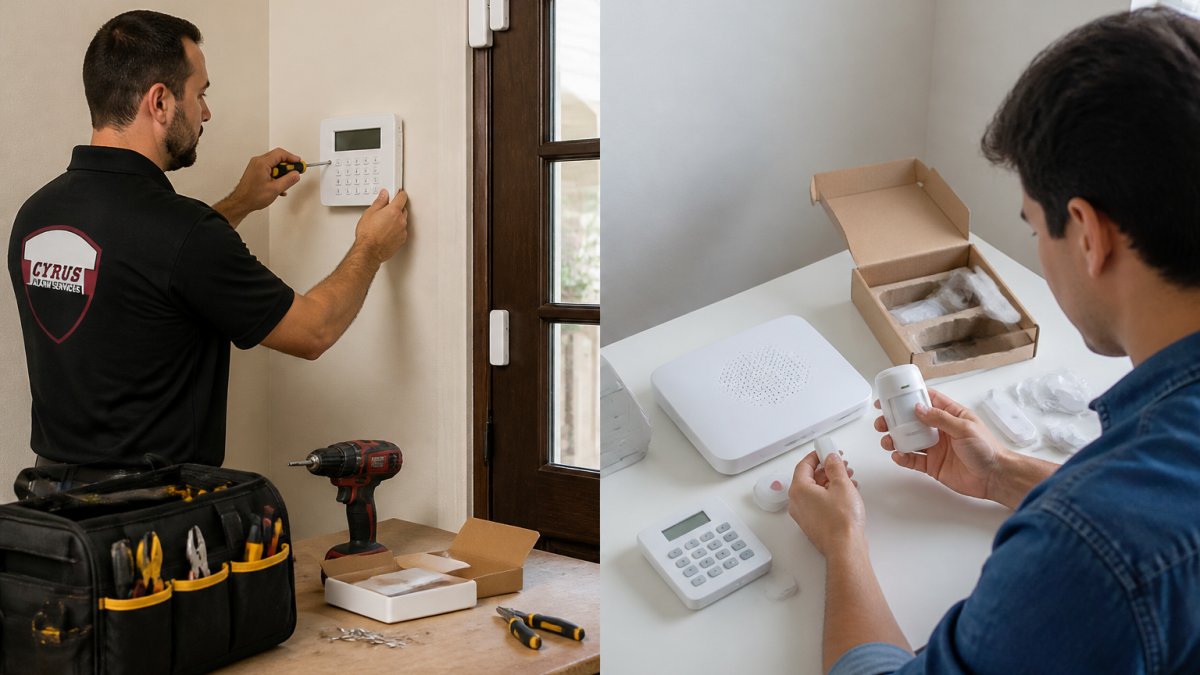
The choice depends on system complexity and technical comfort. Commercial systems like Tyco's demand professional expertise because misconfiguration can compromise security.
We recommend professional installation for most properties because it eliminates configuration errors and ensures monitoring works from day one.
Commercial CCTV Systems and Video Integration
Tyco's CCTV strength lies in enterprise-grade video systems built for continuous recording, high-resolution footage, and access control integration, with outdoor durability, low-light performance, on-site or cloud storage, analytics, and alarm integration.
Vivint's video offering centers on consumer devices like video doorbells and indoor/outdoor cameras, integrated with its app and monitoring service.
For small businesses needing CCTV, the question is enterprise reliability versus consumer convenience. Tyco wins on durability and analytics; Vivint wins on ease of use and mobile access.
Commercial Alarm Monitoring and Response Times
Professional monitoring is the backbone of both systems. Tyco operates commercial monitoring centers staffed for business emergencies, with protocols for rapid response to intrusions, fire, and environmental hazards, coordinating with law enforcement.
Vivint's monitoring handles residential alarms with consumer-focused protocols: operators verify intrusions, contact homeowners, and dispatch emergency services. Response times depend on your location and local dispatch, not the monitoring service.
The critical difference: Tyco's monitoring is engineered for commercial liability and business continuity, while Vivint's targets residential peace of mind.
Small Business Security System Comparison: Which Wins for Commercial Use
For small businesses, the choice between Tyco and Vivint hinges on your needs.
Vivint's commercial offering is minimal; its systems aren't designed for the complexity of retail shops, offices, or warehouses.
If you need CCTV, access control, and alarm monitoring for a small business, Tyco is the established choice.
According to the National Institute of Standards and Technology guidelines on commercial security, small businesses should implement layered security including intrusion detection, video surveillance, and professional monitoring.
Smart Home Automation and Device Compatibility
Most comparisons stop at "Vivint does smart home, Tyco does commercial." The real questions are which platforms each system talks to, which third-party devices you can add, and what happens to your hardware when you change providers.
What Vivint actually integrates with
Vivint's ecosystem centers on its own app and hardware, with interoperability layered on top:
- Voice assistants: Vivint supports Amazon Alexa and Google Assistant for voice control of armed state, lights, locks, and thermostats. Apple HomeKit is not part of the standard integration set, so if your household is built around HomeKit, plan accordingly.
- Z-Wave devices: Vivint panels use Z-Wave for many sensors and peripherals, so a range of third-party Z-Wave locks, thermostats, and smart plugs can often be paired. Compatibility is not universal, and the panel may not expose every feature of a third-party device.
- Cameras and doorbells: Vivint's own cameras and doorbell integrate tightly with its app and monitoring. Third-party cameras generally do not fold into the Vivint app the way first-party hardware does.
What Tyco-side systems integrate with
Commercial and pro-installed systems take a different approach that changes what you can do later:
- Alarm.com and similar platforms: Many pro-installed residential and light-commercial systems run on a dealer platform such as Alarm.com, which supports Z-Wave and Zigbee devices, voice assistant integration, and a consumer-grade app. If your "Tyco" system is a legacy panel monitored through a dealer, your real capabilities depend on that dealer's platform, not the Tyco name.
- Access control and CCTV integration: On the commercial side, the strength is integration between alarm, access control, and video, badge events triggering camera recording, door events appearing in the same log as intrusion alerts. This is more capable than consumer smart home automation, but it is aimed at operations, not at turning off your living room lamp.
- Open protocols and head-end software: Commercial systems more often support open or licensed protocols (for example, ONVIF for cameras and OSDP for access control readers) that let you mix hardware vendors. That flexibility is a real advantage if you want to avoid single-vendor lock-in.
The compatibility question nobody asks: what survives a switch?
Before you buy either system, ask what happens to your hardware if you change monitoring providers:
- Sensors and contacts are often reusable if they speak a standard protocol (Z-Wave, Zigbee) and the new panel supports that protocol. Hardwired sensors are usually reusable with a new panel that accepts hardwired zones.
- Proprietary panels and cameras frequently become bricks when the original provider's service ends, because the firmware is locked to that provider's cloud.
- Locks and thermostats you bought yourself are usually portable. Locks and thermostats bundled into a financed package may be tied to the account.
A practical test: for every device in the quote, ask the salesperson, "If I cancel monitoring in two years, will this device still work locally or with a different panel?" Get it in writing. If the answer is no for most hardware, you are renting a system, not buying one.
Vivint wins on out-of-the-box consumer automation and app polish. Pro-installed and commercial systems win on protocol openness, third-party hardware choice, and integration between alarm, access control, and video. The deciding factor for most buyers is not which app looks better today, it is how much of the hardware you can keep and reuse if you ever switch providers.
Choose a consumer-integrated system if you want automation that works immediately and you plan to stay with one provider. Choose a pro-installed or commercial-grade system if you want to own your hardware, mix vendors, and keep your options open.
Contract Terms, Cancellation Flexibility, and Total Cost of Ownership
Contract structure is where these offerings diverge most sharply and the biggest driver of true cost over time. A low monthly rate on a long contract with provider-owned equipment can cost far more than a higher rate you can exit in a year.
Vivint contract and cost structure
Vivint sells residential systems on a multi-year monitoring agreement, commonly 60 months, with equipment bundled in:
- Monitoring: Published residential monitoring plans have historically started around $24.99 per month for the base tier, with higher tiers (often cited near $39.99 and $49.99 per month) adding camera storage, smart home automation, and expanded support. Treat these as starting points, not final quotes, because promotional pricing and bundling change frequently.
- Equipment: Vivint equipment is generally financed through the agreement rather than sold outright at a one-time price. That keeps the upfront number low but spreads the hardware cost across the term, and the equipment typically remains tied to the account rather than becoming yours to reuse freely.
- Cancellation: Because the term is long, early termination usually triggers a buyout calculated from the remaining balance on the equipment and monitoring. The exact figure depends on how far into the term you are, so the only reliable number is the one printed in your specific agreement.
Tyco-side contract and cost structure
On the commercial side, the picture differs in kind, not just degree:
- Equipment is usually purchased, not financed. Commercial alarm panels, access control, and CCTV hardware are typically capital purchases, which means you own the assets and can depreciate them.
- Monitoring is a service contract. Commercial monitoring agreements commonly run one to five years, and multi-year terms are often rewarded with lower monthly rates. Longer terms buy price stability, which matters when you are budgeting for a multi-site operation.
- Cancellation is negotiated, not standardized. Commercial contracts frequently include termination-for-convenience clauses with notice periods (30 to 90 days is a common pattern) rather than a consumer-style buyout formula. What you can negotiate depends heavily on the dealer or integrator handling the account.
Building a real total cost of ownership figure
Don't compare monthly monitoring rates in isolation. Build a five-year number using these line items:
- Upfront equipment cost (or the financed monthly amount multiplied by the term).
- Installation and activation fees, which are frequently waived on promotion and then reappear at standard pricing.
- Monthly monitoring multiplied by 60 months.
- Add-on subscriptions such as camera video storage, cellular backup, or automation tiers.
- Service calls and out-of-warranty repairs after the initial warranty window.
- Early termination cost if there is any realistic chance you move, sell the property, or change providers.
- Equipment residual value, what the hardware is worth to you, or to a future occupant, at the end of the term.
A useful rule of thumb: if the equipment is not yours at the end of the term, treat the entire equipment portion of your payments as a rental expense, not an investment. That distinction often flips which option is cheaper over five years.
Consumer Reports guidance on home security contracts and cancellation terms recommends confirming equipment ownership, early termination cost, and whether monitoring can be paused before you sign anything.
Never sign a security agreement without written answers to four questions: Who owns the equipment at the end of the term? What is the exact early termination formula? Does the contract auto-renew, and what is the notice window? Are monitoring rate increases capped during the term? A 60-month agreement with a buyout can cost more to exit than the system cost to install.
If you are comparing a financed residential package against a purchased commercial system, convert both to a five-year total before deciding. The option with the lower monthly payment is frequently the more expensive one once the term and buyout are included.
Frequently Asked Questions
What is the difference between Tyco and Vivint security systems?
Tyco (now part of Johnson Controls) historically offered commercial-focused security systems, while Vivint specializes in residential home security with professional monitoring and smart-home integration. Today, Tyco systems are primarily enterprise or commercial installations, whereas Vivint targets homeowners with scalable monitoring plans starting at $24.99/month. The key difference: Tyco emphasizes commercial infrastructure and access control; Vivint emphasizes residential ease-of-use and automation features.
Is Tyco or Vivint better for a small business?
Vivint is primarily residential-focused and lacks dedicated commercial alarm monitoring and CCTV coordination. For small business security, you need a provider offering commercial CCTV systems, commercial alarm monitoring with faster response protocols, and business-grade reliability. Tyco's legacy is commercial security, but current availability varies by region. A local security partner specializing in small business security system comparison, including CCTV, alarm monitoring, and after-hours response, will better match your needs than a residential-only provider.
Can Tyco or Vivint integrate CCTV with alarm systems?
Vivint offers video surveillance as an add-on to its monitoring plans, allowing integration with alarm equipment. However, its video capabilities are designed for residential use. Tyco's commercial heritage includes integrated CCTV and alarm coordination, but modern availability depends on your region and whether you're accessing legacy systems or newer offerings. For businesses requiring seamless commercial CCTV systems and alarm monitoring in one platform, verify current product availability and integration capabilities directly with your chosen provider.
How do contract terms and cancellation policies differ between Tyco and Vivint?
Vivint typically offers flexible monitoring plans that can be adjusted or canceled with notice, though terms vary by package and region. Tyco's contract structure historically reflected commercial agreements with longer terms and stricter cancellation policies, though this varies by current product offering. Before committing, compare cancellation fees, contract length, equipment ownership rules, and early termination costs. A provider offering flexible terms and clear ownership of your equipment gives you more control if your security needs change.