 listicle
Benefits of Local Security Companies in 2026
Table of Contents
- Why Local Security Companies Deliver Faster Response Times
- Personalized Service and Custom Security Plans
- Local Knowledge: Understanding Community Risks and Infrastructure
- Local vs. National Security Companies: What Sets Them Apart
- Local Alarm Monitoring and 24/7 Emergency Response
- Choosing a Security Company: What to Evaluate
- Security System Installation and Maintenance: Local Expertise
- Frequently Asked Questions
Last Updated: October 18, 2026
Why Local Security Companies Deliver Faster Response Times
When a security threat emerges, every second counts. Local security companies operate within a defined geographic area with physical offices nearby, so dispatch teams reach your property faster than national providers routing calls through distant call centers.
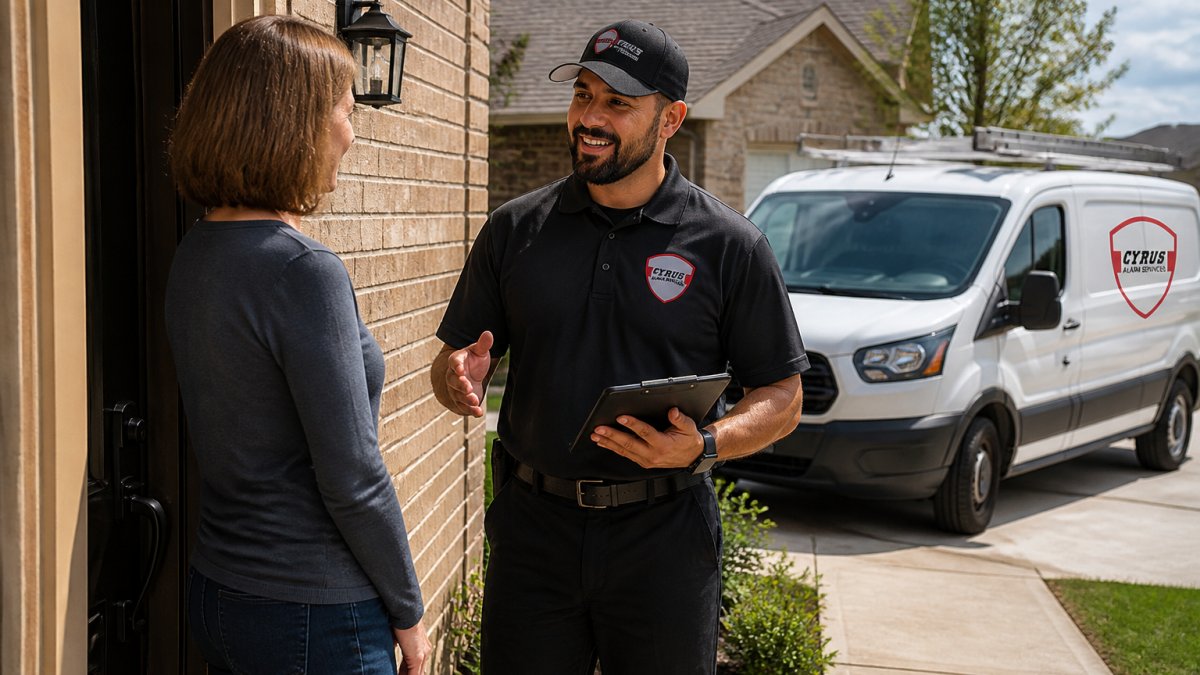
A local security company maintains regional dispatch centers staffed by people familiar with your neighborhood's layout, traffic patterns, and emergency routes, so alarms trigger no routing delays or transfers. At Cyrus Alarm Services, we prioritize responsiveness with direct communication channels.
Local providers also know which police precincts cover your area, how to coordinate with local fire departments, and which routes avoid congestion, knowledge that speeds emergency coordination during a break-in, fire, or medical emergency.
Personalized Service and Custom Security Plans
One-size-fits-all security rarely works. Local security companies build custom solutions through on-site assessments that address your property's unique vulnerabilities.
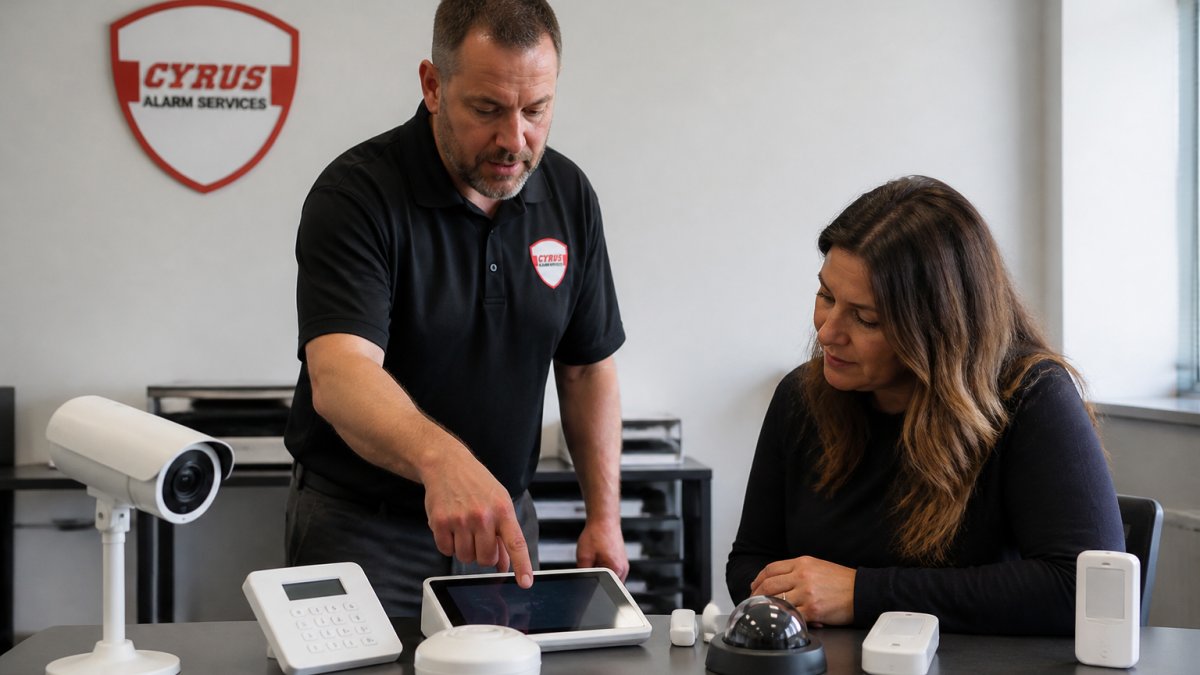
A technician evaluates entry points, lighting, traffic flow, and blind spots, and asks about your schedule, access, and assets. This face-to-face consultation produces plans aligned with your environment rather than a template applied to thousands of properties.
Custom installation follows the same principle: local providers adapt equipment placement, wiring routes, and sensor positioning to your layout. If your older commercial building has unusual wiring, a local company adjusts; national providers often struggle with properties that don't fit their templates, compromising coverage or inflating costs.
Personalized service extends to ongoing support: when you need adjustments or experience issues, you contact the same team that installed your system, and they troubleshoot quickly, continuity a national provider managing millions of accounts cannot replicate.
Local Knowledge: Understanding Community Risks and Infrastructure
Security threats vary by location: urban neighborhoods face different risks than suburban developments, and industrial areas differ from residential blocks. Local security companies track local crime patterns, seasonal risks, and emerging threats.
A local provider knows which neighborhoods see higher break-in rates, where package theft clusters, which corridors attract vandalism, and seasonal patterns like post-holiday burglaries, context that informs better recommendations.
But what separates a genuinely local provider from one that simply claims local knowledge? Concrete data habits. Ask how they source and use local incident data. Strong answers reference verifiable inputs: police crime mapping portals, city open-data feeds, neighborhood association incident logs, and their own alarm-trigger and false-alarm records by address cluster.
Local infrastructure familiarity matters too. A local company understands your area's cellular coverage, internet reliability, and power grid vulnerabilities, shaping system design, backup power, redundant communication paths, and weather-resistant equipment. Ask which carriers have the strongest signal at your property, how long outages typically last, whether battery backup is sized for that duration, and whether the panel supports dual-path communication (cellular plus internet).
Community relationships strengthen security effectiveness. Local providers coordinate with neighborhood watch groups, local law enforcement, and business associations, accelerating response and surfacing intelligence about emerging threats.
Finally, local knowledge should translate into measurable outcomes, not anecdotes. Ask what KPIs providers track: average alarm response time (dispatch to arrival, and monitoring center to dispatch), incident frequency by property type in your area, false alarm rate and reduction process, and coverage completion rate for scheduled patrols. A provider reporting these monthly lets you hold them accountable. Broad safety claims are easy; a monthly KPI report is evidence.
Local vs. National Security Companies: What Sets Them Apart
The fundamental difference between local and national security companies centers on accountability, responsiveness, and community investment. National providers run standardized processes designed for scale; local companies prioritize relationships and customization.
National providers offer technology reach and brand recognition, but their structure creates limitations: your account is one of millions, decisions happen at distant headquarters, and resolving problems means navigating multiple departments.
Local security companies operate differently. Owners and managers often know major customers personally, and since word-of-mouth referrals drive growth, they have powerful incentives to prioritize service quality. When problems arise, you reach decision-makers directly.
The trade-off involves technology sophistication. National providers invest heavily in mobile apps, AI analytics, and smart home platforms; local companies may offer fewer bells and whistles but focus on core reliability. That isn't universal, some local providers, including Cyrus Alarm Services, integrate advanced technology like AI-powered panels and smart home automation while keeping the responsiveness that defines local service.
Local Alarm Monitoring and 24/7 Emergency Response
Alarm monitoring is the backbone of effective security: when your system detects a threat, operators must verify the alarm, contact emergency services, and coordinate response. Local alarm monitoring centers staff for your region, not across national call centers handling millions of accounts.
Local monitoring teams develop familiarity with properties and account holders, distinguishing genuine emergencies from false alarms, reducing unnecessary dispatches while ensuring real threats get immediate attention.
The 24/7 commitment differs. Local monitoring centers maintain dedicated staff for your region; national centers rotate shifts across time zones, sometimes routing calls to any available agent. A local operator familiar with your neighborhood coordinates emergencies more effectively than an agent in another state.
Communication quality improves with local monitoring. When an alarm triggers, the operator reaches you immediately and relays accurate information to responders. If you're traveling or unable to respond, a local operator familiar with your property can give police detailed descriptions, improving outcomes.
Choosing a Security Company: What to Evaluate
Selecting a security provider requires evaluating more than price and brand recognition: local expertise, responsiveness, technology, and long-term viability. The framework below turns those categories into specific questions so you can compare providers on evidence.
1. Licensing, insurance, and vetting. This is the first filter, and most competitors gloss over it. Security guard and alarm companies are regulated at the state level, and requirements vary. Ask the provider: Which state license or registration do you hold, and what is the license number?
2. Staffing and backup coverage. Ask how the company staffs accounts in your area: How many local technicians and guards are employed, and are they employees or subcontractors? What happens if your assigned technician is unavailable, who covers the account, and how quickly?
3. Monitoring and response commitments. Ask where the monitoring center is located, how it is staffed, and what the average and worst-case response times are for alarm verification and dispatch.
4. Technology and integration. Does the company offer remote access through mobile apps? Can you integrate smart home devices, cameras, access control, and alarm monitoring into a single platform? Do they support AI-powered camera analytics, smart locks, and automated workflows? Ask for a demonstration, not a brochure, and ask how the system reports incidents.
5. Contract terms and pricing transparency. Ask about contract length, renewal terms, cancellation policy, and what happens if you move or sell the property. What is included in the monthly monitoring fee versus billed separately (equipment, installation, service calls, permits)? Are there escalation clauses, and how much notice is required to cancel?
6. References and track record. Request at least three references from customers with similar properties, same building type, size, and risk profile. Contact them directly and ask about response times, false alarm handling, support during problems, and whether they would renew.
7. When a national provider may be preferable. A balanced evaluation should acknowledge limits. National providers may be the better choice if you need multi-state coverage under a single contract, standardized systems across many locations, or large-scale resource capacity for major events. Local providers may struggle to match national platforms for enterprise-wide reporting or to surge staff across regions. The right question is which provider's coverage map, staffing model, and contract terms fit your actual footprint and risk profile.
Security System Installation and Maintenance: Local Expertise
Professional installation determines whether your system actually protects your property. Poor installation leaves blind spots, creates false alarms, and compromises effectiveness. Local security companies invest more effort because their reputation depends on customer satisfaction within a limited area.
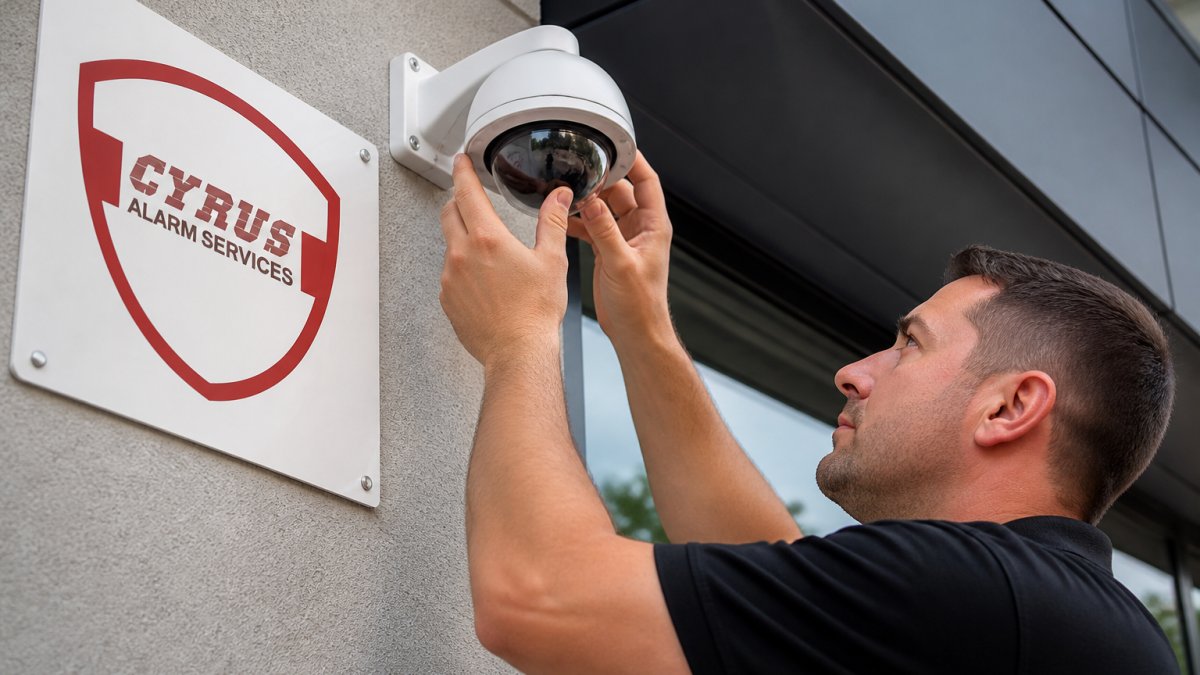
The technician should conduct a thorough site survey before proposing equipment, explain the design and sensor placement, then test every component, train you on operation, and provide clear documentation.
Local providers often install better because they adapt to your property's conditions. Thick walls, unusual wiring, or structural challenges get a modified approach rather than a forced standard installation, improving long-term reliability.
Maintenance is the overlooked element of effective security. Systems need periodic testing, battery replacement, sensor cleaning, and software updates. Local companies typically offer proactive schedules with regular visits; national providers often operate reactively, responding only when customers report problems.
Cyrus Alarm Services emphasizes rigorous in-home testing of all devices so every component functions reliably, preventing failures during emergencies. Local maintenance also simplifies troubleshooting: you contact the same technician who installed your system, and they understand your setup.
| Evaluation Factor | Why It Matters | What to Ask |
|---|---|---|
| Local presence | Enables faster response and accountability | "Do you have a physical office in my area?" |
| Monitoring center | Determines emergency coordination speed | "Where is your monitoring center located?" |
| Installation quality | Prevents blind spots and false alarms | "Can you show me your site survey process?" |
| Maintenance approach | Ensures long-term reliability | "What preventive maintenance do you offer?" |
| Technology integration | Enables remote access and smart features | "What platforms and devices do you support?" |
| Contract transparency | Protects you from surprise costs | "What happens when my contract renews?" |
The choice between local and national security companies reflects your priorities. If you value rapid response, personalized service, local expertise, and accountability, local security companies deliver measurable advantages. If brand recognition and extensive technology ecosystems matter most, national providers may appeal.
For most property owners, a local security company provides protection by combining professional expertise with community commitment. At Cyrus Alarm Services, we pair responsive local service with advanced technology, AI-powered panels, smart home automation, and rigorous in-home testing of every device. Get a quote from Cyrus Alarm Services and discover how local security expertise protects your property with the reliability your family or business deserves.
Frequently Asked Questions
What are the main benefits of hiring a local security company?
Local security companies offer faster emergency response times, personalized service tailored to your specific property, and deep knowledge of community safety risks and local infrastructure. They provide direct communication with decision-makers, custom security plans, and often prioritize long-term customer relationships over high-volume sales. Many families and businesses report greater peace of mind knowing their security provider understands their neighborhood's unique challenges.
Are local security companies better than national companies?
Local and national providers each have distinct advantages. Local security companies excel at rapid response, customization, and community familiarity. National providers may offer broader technology ecosystems and larger support networks. The best choice depends on your priorities: if you value direct communication, faster service calls, and neighborhood expertise, a local provider typically wins. If you need extensive integration with national systems or operate across multiple locations, a national provider may be preferable.
What should I look for when choosing a security company?
Evaluate licensing and insurance credentials, ask about response time guarantees, request references from local customers, and confirm they offer custom installation for your property's layout. Assess their technology platform, whether it includes remote mobile access, AI-powered cameras, and life-safety integration. Request a detailed security assessment and written proposal. Check their track record with false alarms and inquire about their commitment to rigorous testing of all equipment before installation.
Do local security companies respond faster to service calls?
Yes. Local security companies typically respond faster because their technicians are based in the community and don't rely on national dispatch centers or distant service hubs. Many can dispatch a technician within hours rather than days. This speed advantage matters during emergencies, system failures, and routine maintenance. Proximity also enables local providers to conduct thorough on-site assessments and custom installations that national companies often cannot accommodate as quickly.