 ultimate-guide
Smart Lock Access for Travelers: A 2026 Guide
Table of Contents
- Why Smart Lock Access Matters for Frequent Travelers
- How Smart Locks Work: Biometric Authentication and Bluetooth Connectivity
- Remote Smart Lock Management While You're Away
- Creating Temporary Guest Access Codes for Vacation Rentals
- Integrating Smart Locks with Alarm Systems for Complete Protection
- Security Features That Protect Your Home and Luggage
- Choosing the Right Smart Lock: Key Features and Durability
- Conclusion
- Frequently Asked Questions
Last Updated: September 21, 2026
Why Smart Lock Access Matters for Frequent Travelers
Smart lock access for travelers has become essential for modern homeowners who spend weeks or months away from their properties. Whether you're traveling for business or leisure, the ability to grant temporary access to trusted people, housesitters, family members, contractors, without sharing physical keys fundamentally changes how you manage your home's security.
The core problem is simple: traditional locks force you to choose between leaving a key hidden (vulnerable to theft) or arranging in-person handoffs (logistically complex when you're across the country). Smart lock access for travelers solves this by letting you generate temporary access codes, revoke them instantly, and monitor who enters your home in real time from your phone.
At Cyrus Alarm Services, we've worked with homeowners who initially resisted upgrading from mechanical locks. Within weeks of installation, they realized the peace of mind was worth far more than the investment. You stop worrying about whether you left a spare key in the wrong place. You know exactly when the dog walker arrived and left. You can grant access to a plumber without being home.
For frequent travelers, this isn't a luxury, it's practical security infrastructure. A smart lock paired with a proper alarm system creates a comprehensive safety net that mechanical locks simply cannot match.
How Smart Locks Work: Biometric Authentication and Bluetooth Connectivity
Smart locks operate through a combination of mobile applications, Bluetooth connectivity, and encrypted communication protocols. When you install a smart lock, it replaces your existing deadbolt while maintaining the same door frame and hardware. The lock itself contains a motor, battery, and wireless receiver that communicates with your smartphone or a hub device.
Bluetooth connectivity enables direct communication between your phone and the lock when you're within range (typically 20-40 feet). For remote access while traveling, the lock communicates through a secure hub that connects to your home internet, then to your mobile application. This architecture means you're not directly exposing the lock to the internet, the hub acts as a secure intermediary.
The encryption protocols protecting this communication are the same standards used by financial institutions. Your access codes are never transmitted in plain text. Each unlock event is logged with a timestamp, showing exactly who accessed your home and when.
Remote Smart Lock Management While You're Away
Remote access is where smart lock technology becomes genuinely transformative for travelers. From an airport, hotel, or anywhere with internet connectivity, you can unlock your door, check the lock's battery status, and review access logs. This capability requires three components: a smart lock with internet connectivity, a secure mobile application, and a hub or bridge device that connects your lock to your home network.
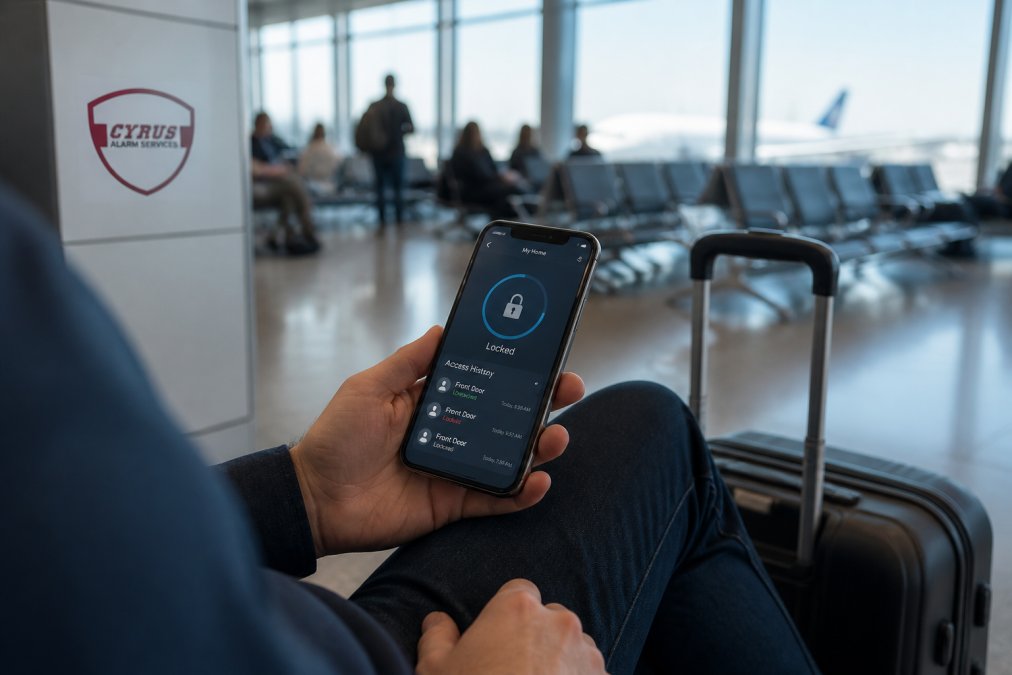
The process works like this: you open your mobile application, select your lock, and tap the unlock button. The request travels through encrypted channels to your home hub, which communicates with the lock. The lock opens. The action is logged with a timestamp. If you granted temporary access to a guest, you can see exactly when they arrived and departed.
This remote management capability eliminates entire categories of travel anxiety. You don't need to call a neighbor to check if you locked the door. You don't need to arrange complex key exchanges with contractors. You can grant access to a housesitter for a specific week, then automatically revoke it when they're no longer needed.
Battery life becomes critical when you're managing locks remotely. Most smart locks run on 4-8 AA or AAA batteries and last 6-12 months between replacements. Your mobile application alerts you when battery drops below 20%, giving you time to plan a replacement before you travel again.
Creating Temporary Guest Access Codes for Vacation Rentals
Temporary guest access codes are the backbone of vacation rental management and the primary reason many property owners choose smart locks. Instead of mailing physical keys or arranging in-person handoffs, you generate a unique code valid for a specific date range. When that period ends, the code automatically stops working.
The process is straightforward: open your mobile application, select "create temporary access," specify the guest's name, set start and end dates, and generate a code. You send this code to the guest via email or text. They arrive, enter the code on the lock's keypad, and the door opens. No physical keys. No lost or copied keys. No security concerns about who might have duplicates.
For vacation rentals, this creates a seamless guest experience. Guests appreciate the convenience of keyless entry. You appreciate the security of knowing exactly when access was used and by whom. If a guest loses the code or needs access extended, you modify it instantly from your phone.
The access logs provide accountability. You can see which code was used, when, and how many times. This matters if something goes missing or if you need to understand a guest's movements for any reason. Some property managers use this data to optimize cleaning schedules, knowing exactly when guests checked out helps coordinate turnovers.
Most smart lock systems allow you to create unlimited temporary codes, so managing multiple properties or frequent turnover is manageable. The codes can be set to work only during specific hours (useful for contractors), or 24/7 for overnight guests.
Integrating Smart Locks with Alarm Systems for Complete Protection
A smart lock alone provides access control. Paired with a comprehensive alarm system, it becomes part of a complete security ecosystem. This integration is where smart lock access for travelers reaches its full potential.
When your smart lock integrates with your alarm system, several protective layers activate. If someone enters an incorrect code multiple times, the alarm system can be configured to alert you. If the lock is tampered with or forced, the alarm triggers. If a door opens when the system is armed in "away" mode, you receive an immediate notification.
Cyrus Alarm Services specializes in this integration. Our AI-powered panels work seamlessly with smart locks, creating a unified security platform. You arm your system before leaving for your trip. Your smart lock remains accessible to authorized guests via temporary codes. If anyone attempts unauthorized entry, using an incorrect code, forcing the lock, or breaking a window, the alarm activates and monitoring begins immediately.
This layered approach addresses a critical vulnerability: a smart lock provides access control, but it doesn't prevent someone from breaking a window or kicking in a door. An integrated alarm system detects these forced entries and responds accordingly.
The mobile application ties everything together. You see lock activity, alarm status, camera feeds, and sensor data in one dashboard. You can disarm the system remotely if a guest needs access, then re-arm it once they've entered. This flexibility is impossible with traditional alarm systems.
Security Features That Protect Your Home and Luggage
Smart lock security extends beyond the lock mechanism itself. Modern systems incorporate multiple protective features designed specifically for travelers.
Encryption protocols ensure that no one can intercept your unlock commands or access codes. The communication between your phone and the lock uses the same standards protecting bank transactions. This means hackers cannot simply jam signals or intercept wireless communications to gain access.
Two-factor authentication adds another layer.
Choosing the Right Smart Lock: Key Features and Durability
Selecting a smart lock requires evaluating features, durability, compatibility, and your specific use case. The best lock for a vacation rental differs from the best lock for a primary residence.
Conclusion
Smart lock access for travelers transforms how you manage your home while away. The combination of remote access, temporary codes, and integration with alarm systems creates security infrastructure that mechanical locks cannot match. You grant access to trusted people without sharing physical keys. You monitor who enters and when. You revoke access instantly if circumstances change.
| Feature | Importance for Travelers | Typical Duration |
|---|---|---|
| Remote access via mobile app | Essential | Indefinite while traveling |
| Temporary access codes | Essential | 1-7 days per guest |
| Real-time activity logs | Important | 30-90 days retained |
| Useful | Permanent household members | |
| Integration with alarm system | Essential | Entire home protection |
| Battery life between replacements | Important | 6-12 months typical |
| Emergency power supply | Important | Backup access method |
| Weather-resistant construction | Important | Outdoor lock durability |
Frequently Asked Questions
Can I control my smart lock remotely while traveling?
Yes. Smart locks with cloud-based monitoring and mobile applications allow you to unlock doors, check access logs, and receive real-time notifications from anywhere. Most systems require a stable internet connection and two-factor authentication for security. Ensure your chosen system integrates with your alarm system for comprehensive remote monitoring and immediate alerts if unauthorized access is attempted.
What is smart lock guest access, and how do I set temporary codes?
Guest access allows you to create temporary access codes that expire automatically, eliminating the need to share physical keys or permanent passwords. Through your mobile application, you can generate unique codes for housekeepers, pet sitters, or rental guests with specific time windows. Activity logs track who entered and when, giving you complete visibility into access events while you're away.
How hackable are smart locks, and what encryption protects my home?
Modern smart locks use encryption protocols and two-factor authentication to prevent unauthorized access. However, vulnerabilities exist if firmware updates are neglected or weak passwords are used. Choose locks with regular security updates, tamper alerts, and emergency bypass protocols. Integrating your smart lock with a monitored alarm system adds a critical layer, any unauthorized entry attempt triggers immediate alerts to your monitoring center.
What should I look for in a travel-ready smart lock?
Prioritize battery life (aim for 6-12 months), weather resistance for exterior doors, Bluetooth connectivity with extended range, and integration with your existing alarm system. Verify the system supports temporary access codes, activity logging, and remote management through a reliable mobile app.