 blog
Are Wireless Home Alarm Systems Better Than Wired?
Last Updated: November 21, 2026
Quick Summary
A wired home alarm system is more reliable and avoids battery upkeep, but installation requires running cable through walls. A wireless system installs quickly with minimal wall work but depends on batteries and radio signals. The better choice depends on whether you are building or renovating, how long you plan to stay, and how much disruption you can accept.
- Wired systems suit new construction, renovations and long-term homeowners who want a permanent setup.
- Wireless systems install faster, are easier to relocate and suit renters or homes where walls cannot be disturbed.
- Wireless sensors need regular battery replacement; wired sensors avoid that routine maintenance.
- Monitoring is usually the largest five-year cost and is roughly the same for either system type.
- A hybrid system combines wired entry points with wireless devices where cable runs are impractical.
Table of Contents
- Wireless vs Wired Home Alarm Systems: The Core Trade-Off
- How Wired Alarm Systems Work and Where They Excel
- How Wireless Alarm Systems Work and Where They Fall Short
- Wireless vs Wired Home Alarm System Pros and Cons
- Wireless vs Wired Home Alarm System Cost Over Five Years
- Outages, Cybersecurity and False Alarms: The Risks Most Comparisons Skip
- Hybrid Wired and Wireless Alarm System Options
- Choosing the Best Wireless vs Wired Home Alarm System for Your Home
- Frequently Asked Questions
Wireless vs Wired Home Alarm Systems: The Core Trade-Off
Choosing between a wireless vs wired home alarm system comes down to one question: do you want a system that is easy to install and move, or one that is permanent and built into the house? The right answer depends on your building, your budget and how you plan to use the system.
A wired system connects sensors and the control panel with physical cable, usually low-voltage wire run through walls and ceilings. A wireless system sends signals between sensors and the panel over radio frequency, so no cable runs are needed. Each approach solves a different problem, and neither is simply better in every case.
The rest of this guide explains where each one fits, what each one costs over time and how a hybrid setup can combine the two.
How Wired Alarm Systems Work and Where They Excel
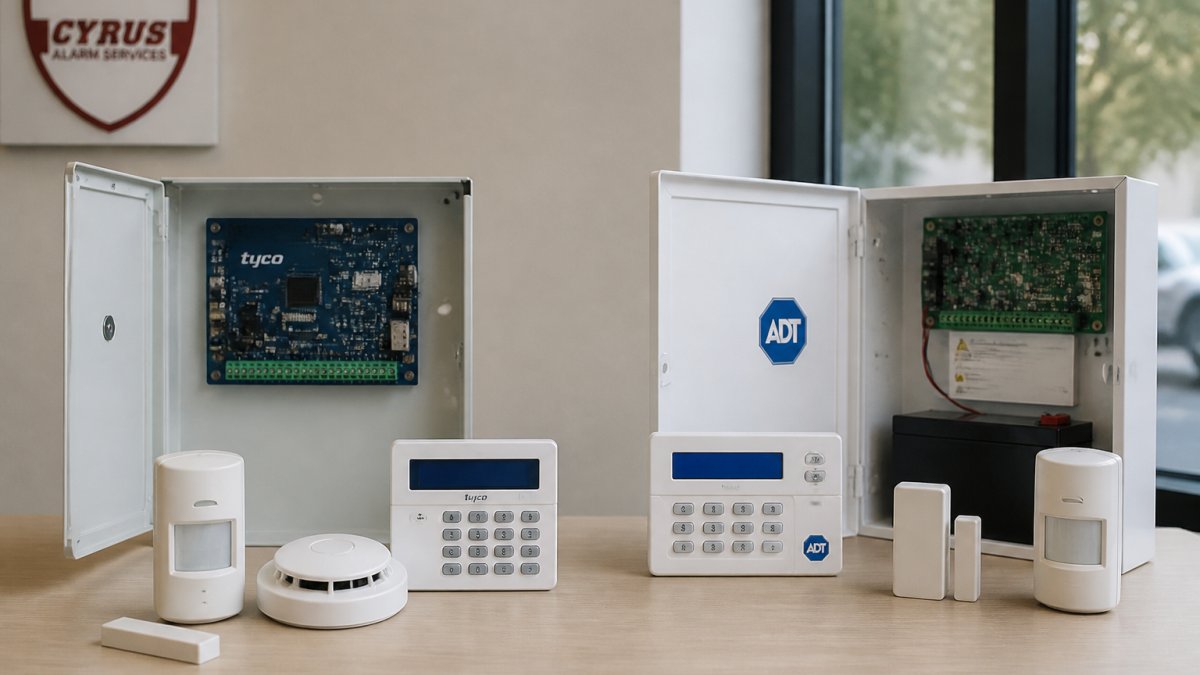
A wired alarm system uses cable to link every door sensor, window sensor, motion sensor and smoke or glass-break sensor to the control panel. Because the connection is physical, the sensors do not depend on radio signals to report a breach. That makes wired systems a strong fit for new construction and for homes undergoing a renovation, when walls are already open.
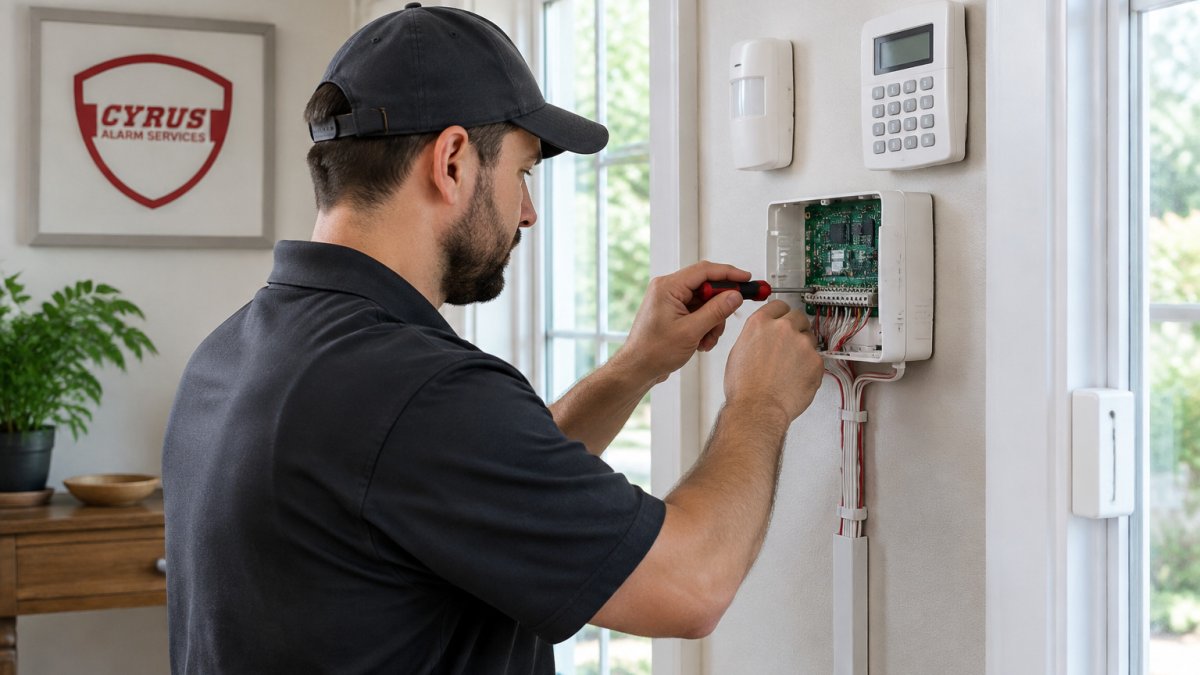
Installation is the main drawback. Running cable through finished walls is labor-intensive and disruptive, and the work usually requires professional installation. Once installed, though, a wired system has no batteries in the sensors to replace on a regular schedule, and it is not affected by signal interference from other devices in the home.
Wired systems also suit homeowners who plan to stay in one place for many years. The equipment is permanent, the cabling is out of sight and the system can be expanded by running additional wire when the home changes.
How Wireless Alarm Systems Work and Where They Fall Short
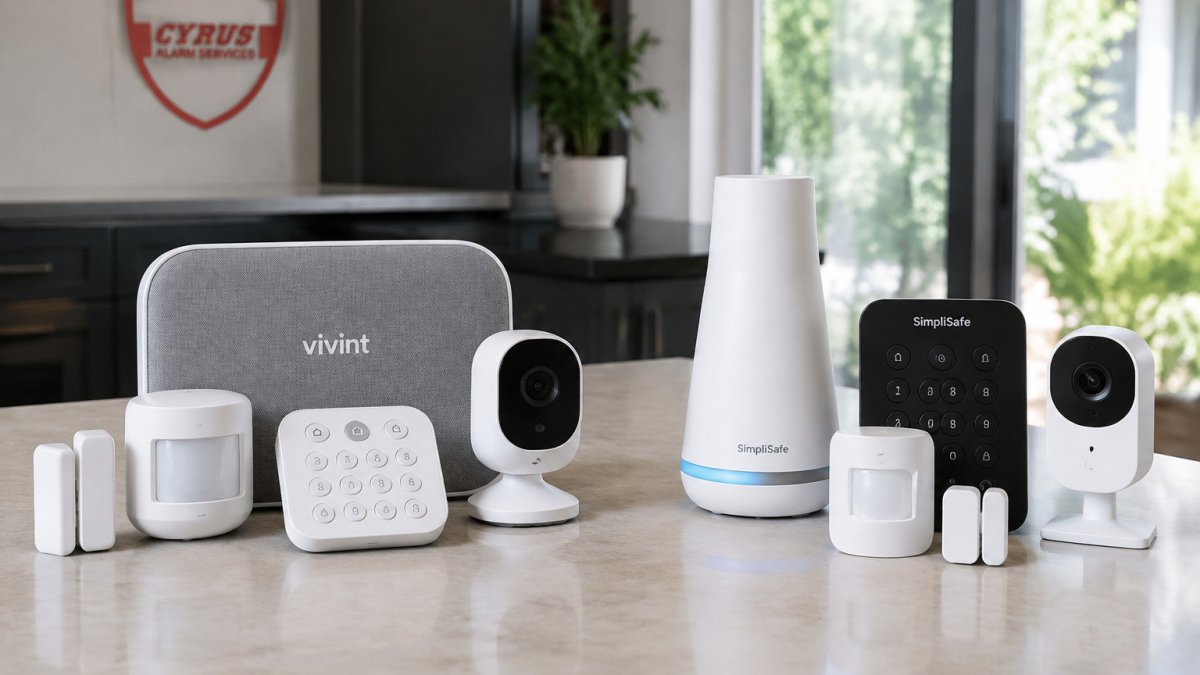
A wireless alarm system places battery-powered sensors wherever you need them and connects each one to the panel by radio. Setup is faster, there is no drilling through finished walls and the sensors can be relocated later with little effort. Renters and homeowners who do not want to disturb their walls often find this approach easier to live with.
The trade-offs are real. Wireless sensors depend on batteries, so battery replacement becomes part of ongoing maintenance. Radio signals can be affected by distance, building materials and interference, and a poorly placed sensor can create coverage gaps. Radio-based communication also raises cybersecurity and signal-jamming concerns that wired systems avoid, which we cover later in this guide.
A common mistake is treating a wireless system as a set-and-forget product. Test each sensor after placement, and check the signal strength at each device before you finalize the layout.
Wireless vs Wired Home Alarm System Pros and Cons
The table below summarizes how the two system types compare on the factors homeowners raise most often.
| Factor | Wired System | Wireless System |
|---|---|---|
| Installation disruption | High, requires cable runs | Low, minimal wall work |
| Signal reliability | Not affected by radio interference | Depends on placement and interference |
| Flexibility to move sensors | Limited | High |
| Battery maintenance | Minimal | Regular sensor battery replacement |
| Best for | New builds, renovations, long-term homes | Renters, existing homes, quick setup |
Wired pros: permanent, reliable signal path, no sensor batteries to track, cannot be interfered with by radio noise.
Wired cons: disruptive installation, harder to expand after walls are finished, usually needs a professional.
Wireless pros: fast installation, easy to relocate, minimal wall damage, suits rentals.
Wireless cons: battery upkeep, radio interference risk, greater cybersecurity exposure.
Wireless vs Wired Home Alarm System Cost Over Five Years
Upfront equipment and installation are only the first line item. A fair comparison of a wireless vs wired home alarm system has to add monitoring, batteries, service visits, repairs and upgrades across a realistic ownership window. The system with the lower sticker price is not always the cheaper one by year five.
Build the comparison in four buckets and ask every provider to quote each one separately.
1. Equipment and installation. Wired systems carry higher labor because low-voltage cable has to be fished through finished walls, ceilings and attics, and each run terminates at the panel. Wireless systems trade that labor for device cost: every sensor has its own radio, battery and housing, so a large sensor count adds up quickly.
2. Monitoring. Monitoring is usually the largest five-year line item and it is roughly the same for either architecture, because you are paying for the central station and the communication path, not the sensor wiring. Expect the plan to differ by connection type (landline, broadband, cellular) and by whether you want app control, video or smart-home integration.
3. Batteries and consumables. Wireless sensors run on batteries, and the replacement interval depends on the device, the traffic it sees and the battery chemistry. A door sensor that opens dozens of times a day drains faster than a window sensor that rarely moves.
4. Repairs, service visits and upgrades. Wired systems tend to have fewer routine service calls but can be expensive to modify once walls are closed, because adding a zone means running new cable. Wireless systems are easier to expand, but a failed sensor or a persistent signal problem can trigger a service visit, and those visits add up.
A practical way to compare two quotes is to build a simple five-year worksheet: equipment plus installation, plus 60 months of monitoring, plus an estimated battery schedule, plus a service allowance, plus one planned upgrade. Ask each provider to fill in their own numbers on the same worksheet so the totals are apples to apples. If a provider will not break out labor from equipment, treat that as a warning sign rather than a convenience.
Watch out: a low monthly monitoring rate can hide a long contract term or an equipment charge that is bundled into the plan, so read the term length and the cancellation terms before you compare monthly prices.
One more cost that comparisons often miss is relocation. A wired system generally stays with the house, which can be a selling point but is money you do not recover if you move.
Outages, Cybersecurity and False Alarms: The Risks Most Comparisons Skip
Most comparisons stop at installation and price. The risks below are where a wireless vs wired home alarm system actually diverges in an emergency, and they deserve the same scrutiny as the sales sheet.
Power outages. Both architectures depend on the control panel, and the panel depends on backup power. A wired system's sensors are usually powered by the panel or the home's low-voltage circuit, so when utility power drops the panel runs on its backup battery and the sensors keep reporting as long as that battery holds. A wireless system's sensors run on their own batteries, so they keep transmitting, but the panel still needs backup power to receive, process and forward the signal.
Internet and cellular outages. A modern panel reports alarms over broadband, cellular or both. If the home loses internet, a panel with cellular backup can still reach the central station; a panel that relies only on broadband goes silent. This matters more than the wired-versus-wireless choice, because a wired system with a single communication path fails the same way a wireless one does. Look for dual-path communication and confirm which path is primary and which is backup.
Cybersecurity and radio-signal attacks. Wireless systems communicate over radio, which introduces risks that a physical cable does not: jamming, replay and interception are the ones practitioners discuss most. The realistic defenses are encryption on the sensor-to-panel link, jamming detection that alerts when the radio band is being flooded, and supervision that flags a sensor that stops checking in.
False alarms. False alarms erode trust in the system and, in many jurisdictions, can lead to fees or a non-response policy for repeated dispatches. The usual causes are motion detectors placed near heating vents, pets moving through a field of view, loose door contacts and environmental swings. A step-by-step guide to reducing false alarm triggers covers these fixes in more depth.
A useful exercise is to walk through three scenarios with your installer: a power outage overnight, an internet outage while you are away, and a sensor that stops reporting. For each one, ask what the panel does, what the monitoring center sees and what you see in the app. If the answer is vague for any scenario, the system is not yet specified well enough.
Hybrid Wired and Wireless Alarm System Options
A hybrid system combines wired sensors at fixed entry points with wireless sensors where cabling is impractical. Many homeowners find this the most practical choice. Wired connections at the main doors give a reliable baseline, while wireless devices cover upstairs windows, a garage or a finished room where running cable would be difficult.
Hybrid designs require careful planning so that the panel supports both connection types and the layout does not leave gaps. Ask your installer to show you how each device connects and how the system reports a fault on either path. This option costs more to design than a single-type system but often delivers the best balance of reliability and flexibility.
Choosing the Best Wireless vs Wired Home Alarm System for Your Home
The best choice depends on your situation. A wired system suits a new build, a major renovation or a homeowner planning to stay for many years who wants minimal ongoing upkeep. A wireless system suits renters, owners who cannot disturb their walls and households that want a quick installation. A hybrid system suits homes where some entry points are easy to wire and others are not.

At Cyrus Alarm Services, we test every device in the home before installation and recommend a configuration that fits your building. Our guide on whether professional installation really matters explains how DIY and professional setups compare. Our family-owned team offers full Alarm.com integration, so you can monitor and manage the system from your phone. Contact us for a consultation and a written quote tailored to your home.
Frequently Asked Questions
Is a wired alarm better than wireless?
Neither is better in every case. Wired systems use physical cable to connect sensors to the control panel, so they are less exposed to radio interference and battery failures, and they are usually the choice for new construction or renovations where walls are already open. Wireless systems use radio signals to connect sensors, which makes installation faster and less disruptive in finished homes and renters' spaces. For most homeowners, the deciding factors are whether the home can accept new wiring, how much disruption is acceptable, and how much ongoing battery maintenance the household is willing to manage.
Can a wireless alarm system work during a power outage?
Yes, most wireless alarm panels run on a backup battery during a power outage, typically for many hours depending on the panel and the number of devices connected. Sensors also rely on their own batteries, so their replacement schedule matters as much as the panel's backup capacity. Communication during an outage depends on the connection path: a panel with a cellular backup can still report alarms when the home's internet is down, while a panel relying only on broadband may not. Ask any provider which communication paths stay active during an outage before you buy.
Can you add wireless sensors to a hardwired alarm system?
Yes, many hardwired panels accept wireless sensors through an add-on receiver module or a hybrid-capable panel. This lets homeowners keep existing wired door and window contacts while adding wireless motion sensors or devices in areas where running new wire is impractical. Compatibility depends on the panel model, so confirm the specific receiver and sensor models work together before purchasing. A professional installer can also verify signal strength and placement during setup.