 Listicle
Top Alternatives to ADT and Vivint for Home Security in 2026
Last Updated: November 5, 2026
Quick Summary
The top ADT and Vivint alternatives for comprehensive residential security are professional providers that pair custom installation with full monitoring, plus a handful of DIY systems for households that want lower upfront costs. Homeowners search for ADT and Vivint alternatives because both incumbents are known for long contracts and premium pricing.
- We scored every provider on equipment quality, installation method, monitoring options, contract terms, and smart-home capability.
- Cyrus Alarm Services provides custom alarm system design and is family-owned and operated.
- Self-monitoring means you are the monitoring center, so alerts reach your phone, not a dispatcher.
- Build a single spreadsheet with five cost buckets filled from written quotes, not sales calls.
- Sequence the handoff so monitoring coverage never lapses.
Table of Contents
- Why Homeowners Are Searching for ADT and Vivint Alternatives
- How We Compared the Top Residential Security Providers
- Cyrus Alarm Services: The Best Professional Home Security System for Custom Needs
- Frontpoint, Cove, Alder, and Brinks: ADT Competitors Worth a Look
- Ring Alarm and Wyze: The Best Home Security System Without Subscription
- How SimpliSafe Compares on Price, Contracts, and Equipment
- Total Cost of Ownership: Equipment, Installation, and Monitoring Fees
- Matching a System to Your Household and Switching Providers
- Frequently Asked Questions
Why Homeowners Are Searching for ADT and Vivint Alternatives
The top alternatives to ADT and Vivint for comprehensive residential security are professional providers that pair custom installation with full monitoring, plus a handful of DIY systems for households that want lower upfront costs. Homeowners search for ADT and Vivint alternatives because both incumbents are known for long contracts and premium pricing.
At Cyrus Alarm Services, we hear the same questions repeatedly: what happens after the contract ends, and who actually answers when the alarm trips. Below, we break down the shortlist the way we would walk a neighbor through it, and we show where a local, family-owned provider fits.
The market now offers real choice. According to FBI burglary statistics, property crime remains a persistent concern for households, which is why monitoring quality matters more than brand recognition.
How We Compared the Top Residential Security Providers
We scored every provider on five factors: equipment quality, installation method, monitoring options, contract terms, and smart-home capability. A cheap panel with a weak monitoring center is a liability, not a bargain.
The Criteria That Decided the Shortlist
| Criterion | What We Looked For | Why It Matters |
|---|---|---|
| Equipment | Door and window sensors, motion sensors, glass-break sensors | Core intrusion detection coverage |
| Installation | Professional vs. DIY | Reliability and correct placement |
| Monitoring | Professional monitoring or self-monitoring | Emergency response speed |
| Contract | Month-to-month vs. multi-year | Flexibility and total cost |
| Smart home | App control, smart locks, voice control | Daily usability |
Cyrus Alarm Services: The Best Professional Home Security System for Custom Needs
Cyrus Alarm Services provides custom alarm system design for households that want a system built around the property rather than a boxed kit. As a family-owned and operated business, we build each package around the home's layout and test every device in place.
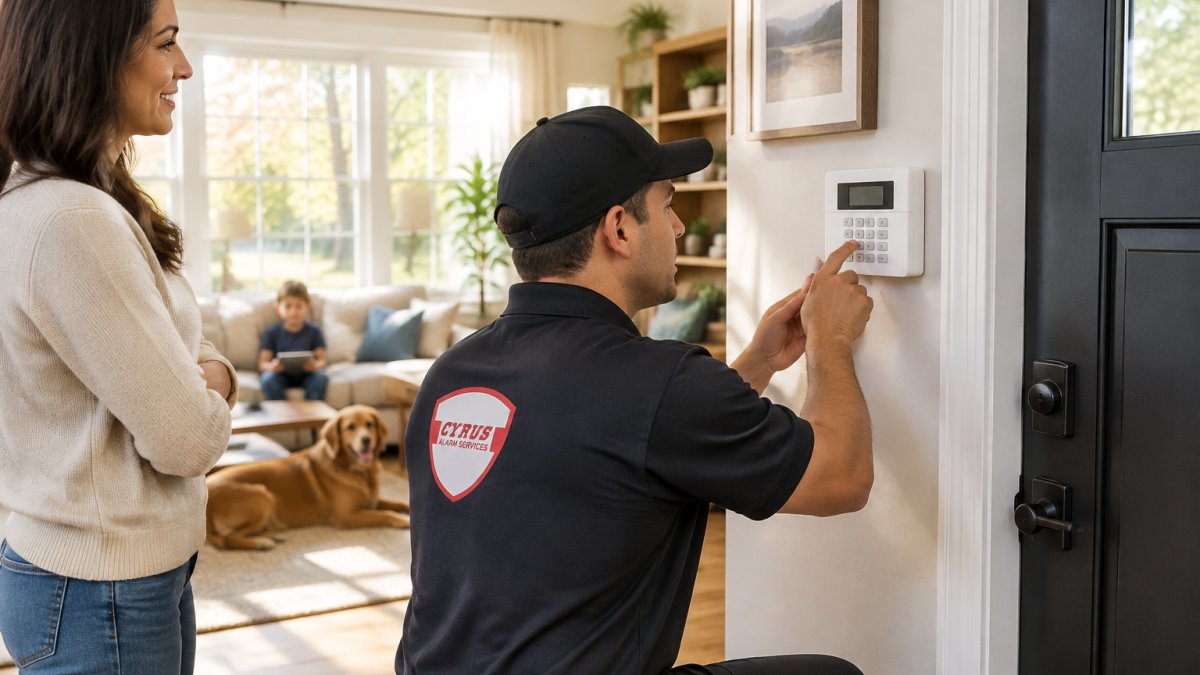
Our approach covers alarm system design, CCTV installation, and life safety monitoring. We offer full Alarm.com integration for remote management, and we partner with Resideo (Honeywell) products and work as an authorized 2GIG EDGE Panel provider. If your family travels and needs reliable remote access, or your building has unusual wiring, that is exactly the work we specialize in.
Pros and Cons of a Local, Family-Owned Provider
The advantage is accountability. You get custom consultation, installation, and servicing from the same business. For a broader look at why that matters, see the benefits of local security companies.
Best for: Families, frequent travelers, and small businesses that want a tailored, professionally monitored system. Skip if: You want a self-installed kit and nothing else.
Frontpoint, Cove, Alder, and Brinks: ADT Competitors Worth a Look
If you are weighing a switch, our roundup of ADT alternatives for homes covers the field in more depth.
Ring Alarm and Wyze: The Best Home Security System Without Subscription
You install the sensors yourself, pair a video doorbell or indoor camera, and watch alerts on your phone.
The catch is response. Self-monitoring means you are the monitoring center, so a motion sensor alert at 2 a.m. reaches your phone, not a dispatcher. Adding optional professional monitoring later usually restores emergency response, but check the plan terms first.
How SimpliSafe Compares on Price, Contracts, and Equipment
Where it falls short is customization. Older buildings with odd layouts, or properties needing outdoor cameras and life-safety devices wired in, often need more than a kit provides. For a deeper look, read our SimpliSafe alternative comparison.
Total Cost of Ownership: Equipment, Installation, and Monitoring Fees
A low monthly fee paired with a long term and financed equipment can cost more than a higher fee with no contract.
The Five Cost Buckets to Add Up
Build a single spreadsheet with these columns, and fill each one from the provider's written quote or published price list rather than from a sales call:
| Cost bucket | What to capture | Where households get surprised |
|---|---|---|
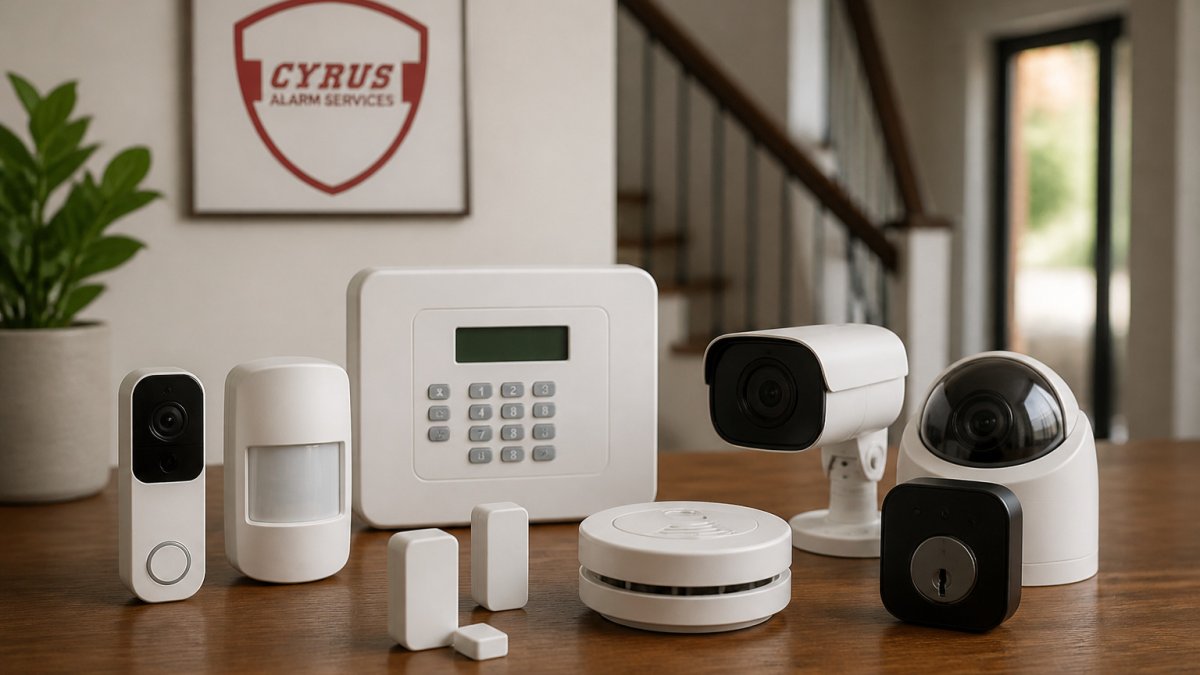
| Equipment | Panel or base station, door/window sensors, motion sensors, glass-break sensors, keypad, siren, cameras, cellular communicator | Sensor count is quoted per opening, so confirm how many openings a starter kit covers |
| Installation | Professional install fee, activation fee, trip charges, wiring or panel-replacement labor | DIY avoids the fee but shifts placement risk to you; misplaced sensors drive false alarms |
| Monitoring | Monthly professional monitoring rate, cellular backup line, video storage tier, self-monitoring discount | The lowest advertised rate often requires a long term or excludes cellular backup |
| Financing | Interest or rent-to-own markup on equipment, origination fees, early-payoff terms | A financed bundle can cost materially more than the same equipment bought outright |
| Exit | Cancellation fee, remaining-balance acceleration, equipment return or buyout, reactivation fee if you return | The exit cost is the number most households never ask for until they move |
A Like-for-Like Comparison Method
Pick a consistent horizon, 36 months is a common planning period, and compute one number per provider: (equipment + installation + financing charges) + (monthly monitoring × 36) + (expected exit cost if you leave at month 36). Do this for the same sensor count and the same monitoring tier across every provider.
Contract and Cancellation Terms to Verify in Writing
Ask for these five items in writing before signing: the term length and whether it auto-renews; the cancellation fee formula (flat fee versus remaining-months acceleration); whether equipment is owned, financed, or rented; the equipment return or buyout obligation at exit; and the price-increase clause for monitoring. Month-to-month and multi-year terms are not inherently better or worse, they change which bucket dominates your total. Professional installation matters here too, because misplaced sensors drive false alarms and wasted emergency response; our guide on whether professional alarm installation matters explains that trade-off. For current pricing on a custom system built around your actual sensor count, request a quote from us directly.
Matching a System to Your Household and Switching Providers
Match the system to the household, not the brochure, and when you switch, plan the handoff before you cancel the old service.
Household-Specific Shortcuts
| Household type | Prioritize | Deprioritize | Practical note |
|---|---|---|---|
| Renters | Self-install or peel-and-stick sensors, month-to-month monitoring, no drilling | Hardwired panels, long terms | Confirm the lease allows adhesive mounts and that equipment is yours to take |
| Homeowners staying put | Professional install, life-safety devices, cellular and battery backup | Lowest advertised monthly rate | Custom placement and in-home testing pay back over years |
| Rural or low-signal households | Cellular backup, battery backup, local siren | App-only features that depend on broadband | Verify carrier coverage at the address before signing |
| Smart-home users | App control, smart locks, voice control, camera integration | Proprietary hubs that lock you in | Ask which third-party devices the panel supports before purchase |
| Self-monitoring households | No-subscription self-monitoring, camera alerts | Professional dispatch upsell | You are the monitoring center; confirm optional monitoring can be added later |
| Families with young children | Fire and carbon monoxide detection, life-safety monitoring | Camera-heavy bundles | Life-safety response is the feature that matters at 2 a.m. |
| Small businesses | CCTV surveillance, after-hours intrusion, multiple user codes | Consumer kits with one keypad | Confirm the monitoring center handles commercial accounts |
Can You Reuse Existing Sensors, Cameras, and Wiring?
Compatibility is the question that decides whether a switch is a weekend project or a full reinstall. Work through these checks before you commit:
- Sensors: Most wireless sensors are proprietary to their panel's radio protocol, so they usually cannot be reused across brands. Hardwired sensors can often be reused if the new panel supports a wired-to-wireless translator, ask the installer specifically.
- Cameras: Cameras tied to a provider's app or cloud usually stop working for remote viewing once the account closes; standalone cameras that support a standard protocol are more portable.
- Wiring: Existing door, window, and motion wiring can often be reused, but the labor to map and test it is a real cost, get it quoted, not assumed.
- Smart-home devices: Locks, thermostats, and voice assistants that work over common smart-home standards are more likely to survive a switch than devices paired only to the old provider's hub.
- Cellular communicator: Usually replaced with the panel; confirm whether the new provider supplies it or charges for it.
A Practical Switching Sequence
- Get the new provider's written quote with sensor count, monitoring tier, term, and exit terms.
- Confirm in writing which existing devices can be reused and which must be replaced.
- Schedule the new install and test it in place before you touch the old account.
- Only then cancel the old service, and get the cancellation confirmation and any equipment-return instructions in writing.
- Verify the old provider stops billing and that the new monitoring center has your correct call list and passcode.
Sequence the handoff so monitoring coverage never lapses.
If you are ready to move, here is how to hire a security system installer.
Frequently Asked Questions
Is there a better security system than Vivint?
Whether a system is better depends on your priorities. Vivint offers integrated smart-home technology, but some homeowners prefer providers with more flexible contracts or local service. A family-owned provider like Cyrus Alarm Services offers custom design, in-home testing of every device, and Alarm.com integration, which suits households wanting tailored coverage over a one-size-fits-all package.
Who is ADT security's biggest competitor?
The market has no single dominant competitor. Brinks, Frontpoint, Cove, Alder, and regional providers like Cyrus Alarm Services all compete for residential accounts. When comparing ADT competitors, look at contract length, equipment ownership, and monitoring fees rather than brand size. Local providers can offer custom system design, and Cyrus Alarm Services is a family-owned and operated business.
What is the best home security system without a subscription?
The trade-off is that no monitoring center dispatches emergency responders. If you want professional monitoring without a long contract, ask providers about month-to-month terms and confirm what happens to your equipment if you cancel.
How do ADT and Vivint alternatives compare on equipment and smart-home features?
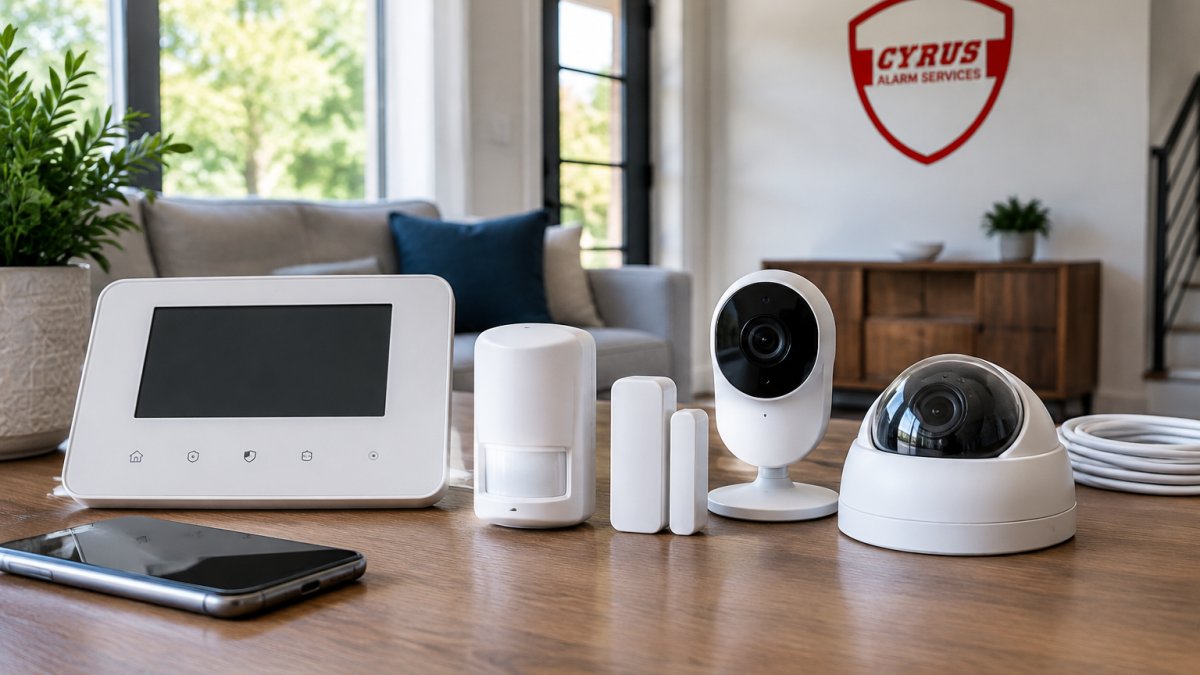
Most alternatives include door and window sensors, motion sensors, and a mobile app for remote access. Higher-tier systems add video doorbells, indoor and outdoor cameras, smart locks, and voice control. Cyrus Alarm Services builds around Alarm.com integration and AI-powered panels, so automation and remote management work from one app. Compare equipment packages line by line before deciding.
Can I switch from my current provider without replacing all my equipment?
Sometimes. Many panels and sensors are locked to a specific provider, so compatibility varies. Ask a prospective installer to assess your existing door and window sensors, motion sensors, and wiring before you commit.
The gap between a system that looks good on paper and one that protects your family comes down to design, testing, and support. Cyrus Alarm Services builds custom systems with rigorous in-home testing, full Alarm.com integration, and AI-powered panels for remote control, backed by a family-owned team that answers when you call. Get started with Cyrus Alarm Services and get a system designed for your home, not a generic kit.